
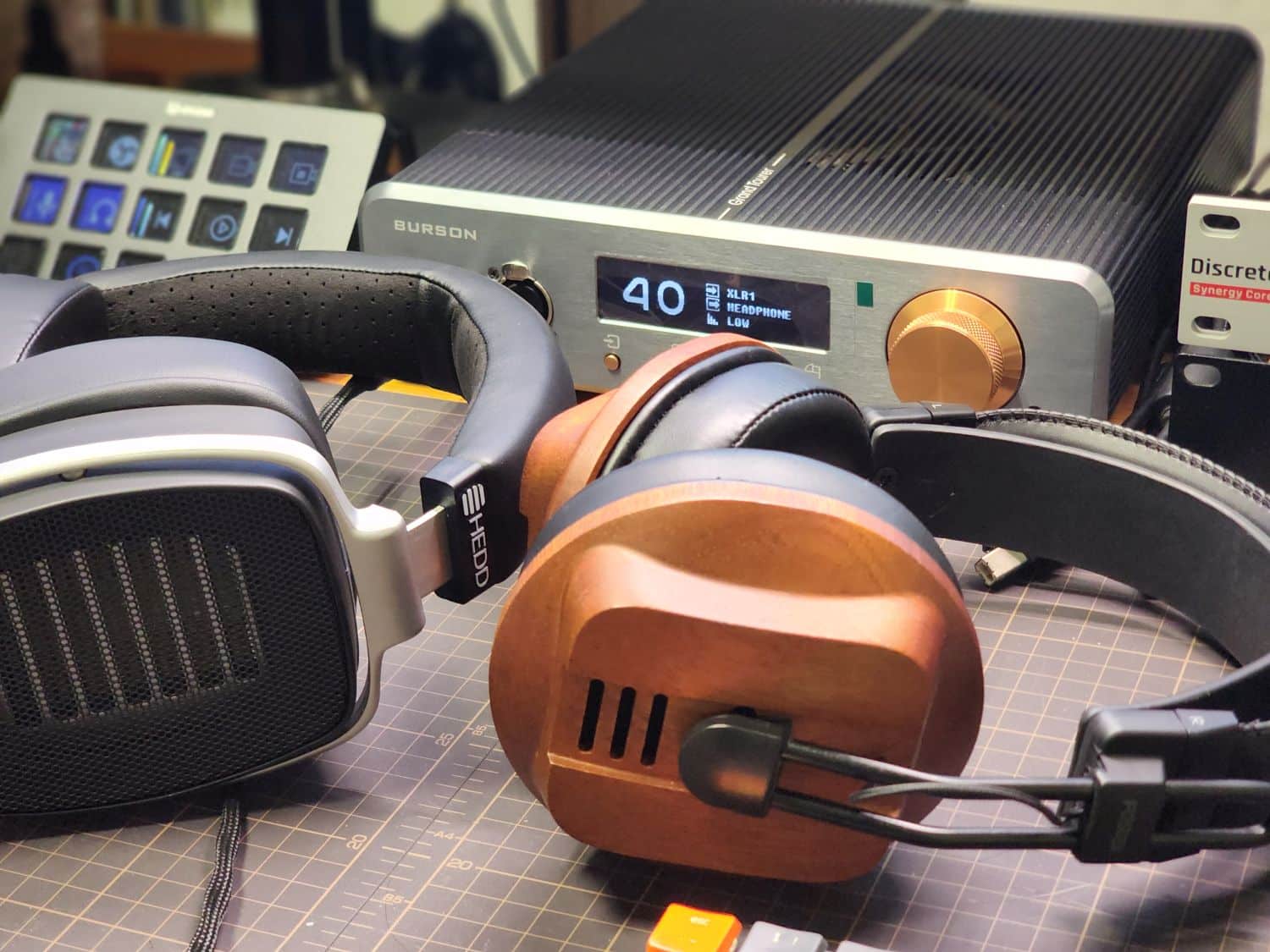
The Soloist 3X GT is my first dive into the Burson world, and it’s already made a bold statement. What initially drew me in was the technical allure—the high-speed, high-current switching power supply and the use of fully discrete opamps. On paper, it sounded like an audiophile’s dream. But once I actually plugged in my headphones and hit play, I realized this wasn’t just impressive engineering—it translates directly into the sound in a way that’s immediately tangible.
Listening to Slipknot through the Soloist 3X GT paired with the HEDDphone was a revelation. The sound is insanely powerful and electrifying, with a sense of scale and impact that had me cranking the volume higher and higher. And yet, no matter how loud it got, the sound never became fatiguing or harsh. It remained controlled, immersive, and clean—like the amp was daring me to keep going. It’s an adrenaline rush in audio form.
Right now, I’m running my headphones through the single-ended output, but I’m already planning to upgrade to a balanced cable to see how far this amp can really go. I’m also incredibly curious to hear how the sound would evolve with a stronger external power supply like the Fusion Core, or with an opamp swap to the V7 series. If the stock setup already delivers this kind of thrill, the potential upgrades could push it into truly endgame territory.
Matching notes: At 42 Ω and 87 dB/mW, the HEDD HEDDphone is a low-impedance load, and a fairly demanding one: about 2.9 V (200 mW, 69 mA) for 110 dB SPL (calc.). Burson does not publish a 42 Ω rating for the Soloist 3X GT. Its 32 Ω and 100 Ω ratings (8 W XLR / 4 W SE; 3.8 W XLR / 1.9 W SE) fall either side of it. The Soloist 3X GT’s 0.5 Ω headphone output impedance is 1/84 of the load. [1] [2] [3]
Matching notes: At 30 Ω and 100 dB/mW, the Fidelio X2HR is a low-impedance load, and an efficient one: about 0.55 V (10 mW, 18 mA) for 110 dB SPL (calc.). Burson does not publish a 30 Ω rating for the Soloist 3X GT. Its 16 Ω and 32 Ω ratings (10 W XLR / 5 W SE; 8 W XLR / 4 W SE) fall either side of it. The Soloist 3X GT’s 0.5 Ω headphone output impedance is 1/60 of the load. [4] [2] [3]
Specs from manufacturer data unless a source below says otherwise. “calc.” values are worked out from those figures (V = √(P × R); 110 dB SPL used as a loud reference level). Gear listed without specs is not in our spec library yet.