
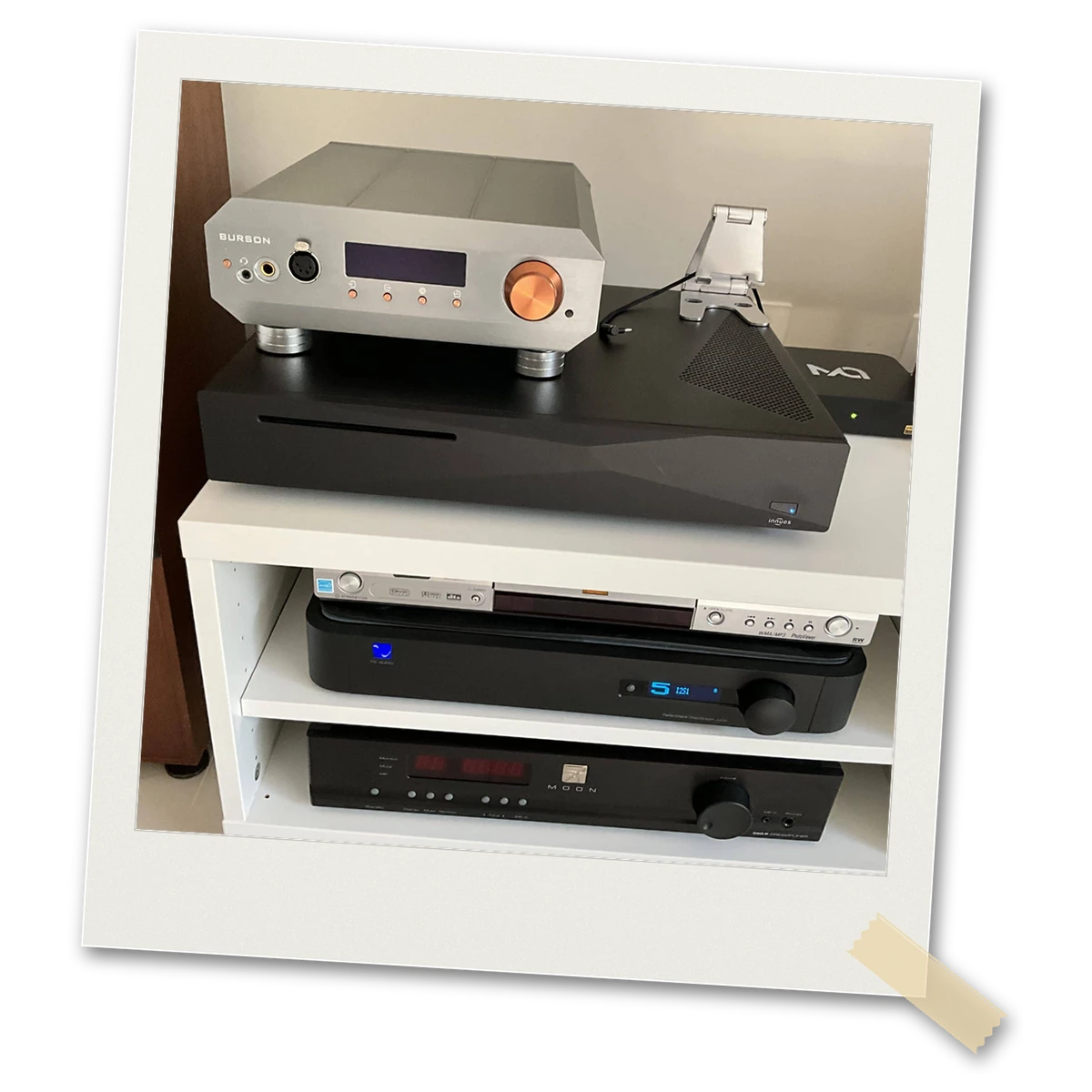
Kelvin’s Burson Soloist Voyager with Kennerton Odin

Published on

Post Info

I’m thoroughly enjoying the rich, detailed sound that this setup delivers—it’s truly a treat for the ears. The clarity and depth are impressive, and it seems to pair exceptionally well with my headphones, bringing out the best in them. I’m already noticing an enhanced listening experience, and I’m excited to see how things will improve even further once the Fusion Core arrives (I’m currently awaiting stock). I have high hopes that it will take this already fantastic setup to the next level.

The System

Listening with

Kennerton Odin

Burson

Burson Soloist Voyager · Headphone amplifier / preamp (Class-A)
  • Output power (XLR / SE): 16 Ω 10 W / 5 W · 32 Ω 8 W / 4 W · 100 Ω 3.8 W / 1.9 W · 150 Ω 1.3 W / 0.65 W · 300 Ω 0.64 W / 0.32 W
  • Output impedance: 0.5 Ω (headphone); 25 Ω (pre out)
  • Gain: 3 levels: High full power (XLR 10 W / SE 5 W), Medium 50%, Low 10% (IEM); dB not published
  • Inputs: 2x XLR; 2x RCA; mic bypass
  • Input impedance: 38 kΩ
  • Input sensitivity: RCA 2 V; XLR 4 V+ (line level)
  • Outputs: XLR + SE headphone; XLR + RCA pre out; RCA subwoofer out
  • Other: THD <0.0015%; FR ±1 dB 0-48 kHz; Standard/Deluxe: 24V5A PSU or Super Charger 5A, V6 Vivid or V7 Vivid Pro; SP02 installed

[1] [2]

Also in the system

Innuos Zenith MK3
PS Audio Directstream Junior

Specs from manufacturer data unless a source below says otherwise. “calc.” values are worked out from those figures (V = √(P × R); 110 dB SPL used as a loud reference level). Gear listed without specs is not in our spec library yet.

  1. Burson Soloist Voyager product page
  2. Burson Soloist Voyager User Manual V1.2 (Burson downloads)