
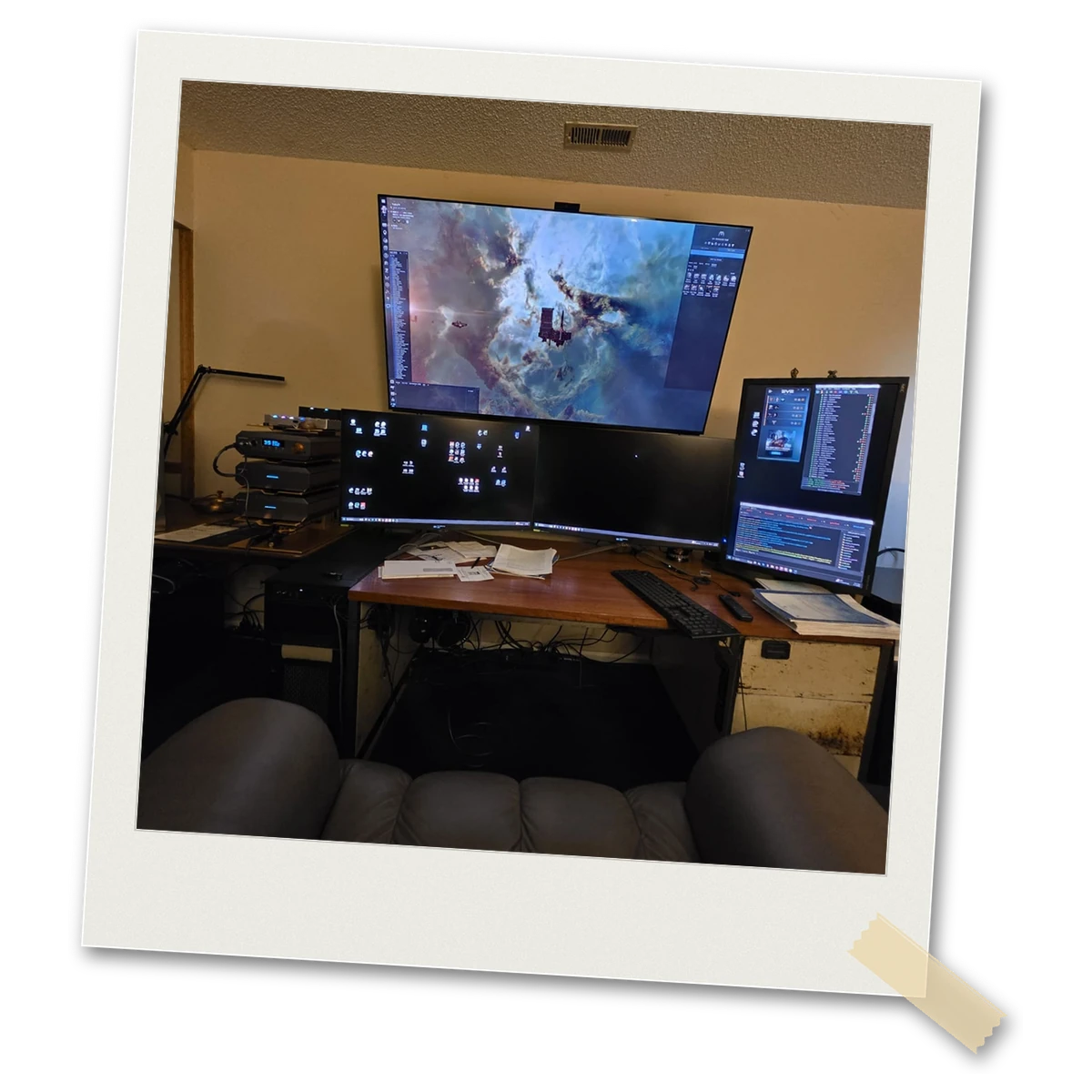
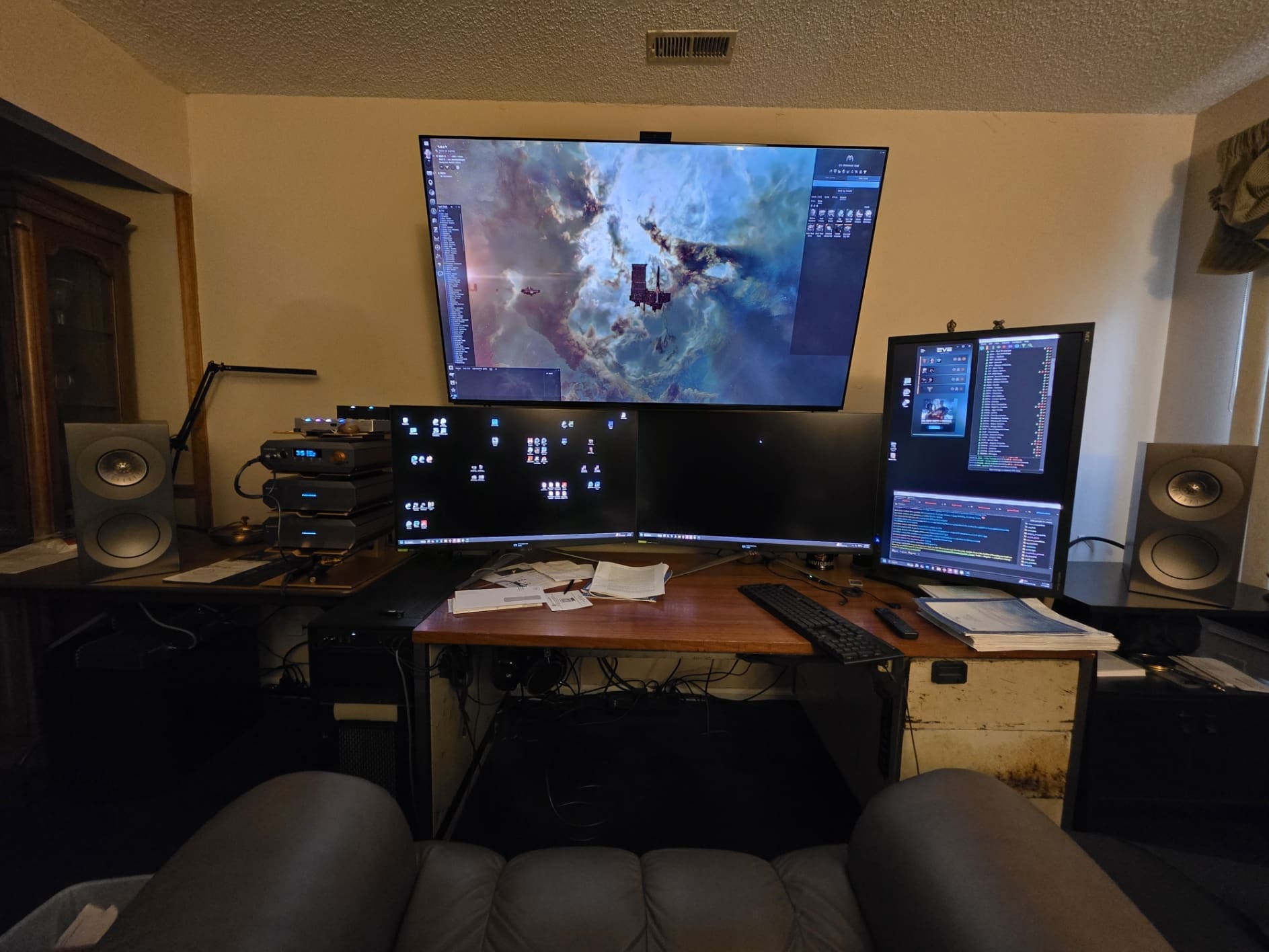
Benjamin’s Burson Soloist Voyager with KEF Reference 1 Meta and SVS SB-3000

Published on

Post Info

I’ve had the pleasure of enjoying Burson Audio equipment in my home for the better part of two decades, and it continues to impress me with every upgrade. The latest additions pictured here are the newest iterations of the Soloist and Timekeeper series, replacing earlier versions I’ve owned and loved.
Burson has consistently delivered outstanding audio performance, and in my experience, their gear offers unbeatable value for the money. The craftsmanship, clarity, and musicality of their components are truly exceptional. With this latest setup, the sound quality has reached a whole new level—it’s nothing short of breathtaking. The depth, detail, and presence make every listening session feel immersive and emotionally engaging.
In short, Burson Audio has set a standard that few others can match.

The System

Listening with

KEF Reference 1 Meta · Speakers: bookshelf, three-way bass reflex (Uni-Q)
  • Impedance: 4 Ω (minimum 3.2 Ω)
  • Sensitivity: 85 dB (2.83 V / 1 m)
  • Frequency response: 45 Hz – 35 kHz (±3 dB)
  • Recommended amplifier power: 50 – 200 W
  • Other: max SPL 111 dB

[1]

SVS SB-3000
Audeze LCD-3 · Headphones: open-back, planar magnetic, circumaural
  • Impedance: 110 Ω
  • Sensitivity: 101 dB/1mW (at Drum Reference Point) ≈ 110.6 dB/V (calc.)
  • Frequency response: 10 Hz – 50 kHz
  • Plugs / cables supplied: 4-pin XLR cable; 4-pin XLR to 6.35 mm adapter cable; 6.35 to 3.5 mm adapter
  • Other: recommended power >250 mW;

Matching notes: At 110 Ω and 101 dB/mW, the LCD-3 is a low-impedance load, and an efficient one: about 0.93 V (7.9 mW, 8.5 mA) for 110 dB SPL (calc.). Burson does not publish a 110 Ω rating for the Soloist Voyager. Its 100 Ω and 150 Ω ratings (3.8 W XLR / 1.9 W SE; 1.3 W XLR / 0.65 W SE) fall either side of it. The Soloist Voyager’s 0.5 Ω headphone output impedance is 1/220 of the load. [2] [3] [4]

Burson

Burson Soloist Voyager · Headphone amplifier / preamp (Class-A)
  • Output power (XLR / SE): 16 Ω 10 W / 5 W · 32 Ω 8 W / 4 W · 100 Ω 3.8 W / 1.9 W · 150 Ω 1.3 W / 0.65 W · 300 Ω 0.64 W / 0.32 W
  • Output impedance: 0.5 Ω (headphone); 25 Ω (pre out)
  • Gain: 3 levels: High full power (XLR 10 W / SE 5 W), Medium 50%, Low 10% (IEM); dB not published
  • Inputs: 2x XLR; 2x RCA; mic bypass
  • Input impedance: 38 kΩ
  • Input sensitivity: RCA 2 V; XLR 4 V+ (line level)
  • Outputs: XLR + SE headphone; XLR + RCA pre out; RCA subwoofer out
  • Other: THD <0.0015%; FR ±1 dB 0-48 kHz; Standard/Deluxe: 24V5A PSU or Super Charger 5A, V6 Vivid or V7 Vivid Pro; SP02 installed

[3] [4]

Also in the system

Chord Hugo M Scaler · Upscaler: digital upscaler (1,015,808-tap WTA filter) for Chord DACs
  • Inputs: galvanically isolated USB-B; 2x coax BNC; 2x optical
  • Outputs: dual BNC (to 768 kHz); BNC S/PDIF; optical
  • Other: PCM 44.1-768 kHz, 16-32 bit; 15 V 4 A PSU; 2.55 kg

[5] [6]

Chord Qutest · DAC
  • Output impedance: not published (Stereophile measured 0.4 @ 1 kHz)
  • Output voltage: RCA 1 / 2 / 3 V (selectable)
  • Inputs: USB-B 768 kHz/32-bit DSD512; 2x BNC coax 384 kHz (768 kHz dual-data); optical
  • Outputs: RCA

Matching notes: Burson lists the Soloist Voyager’s analogue inputs as RCA 2 V; XLR 4 V+ (line level) (38 kΩ input impedance). The Chord Qutest is rated at 1 / 2 / 3 V (selectable) (RCA) output. [7] [8] [9] [3] [4]

Specs from manufacturer data unless a source below says otherwise. “calc.” values are worked out from those figures (V = √(P × R); 110 dB SPL used as a loud reference level). Gear listed without specs is not in our spec library yet.

  1. KEF Reference 1 Meta: us.kef.com
  2. Audeze LCD-3: audeze.com
  3. Burson Soloist Voyager product page
  4. Burson Soloist Voyager User Manual V1.2 (Burson downloads)
  5. Chord Hugo M Scaler: chordelectronics.co.uk
  6. Chord Hugo M Scaler: PDF (chordelectronics.co.uk)
  7. Chord Qutest: chordelectronics.co.uk
  8. Chord Qutest: PDF (chordelectronics.co.uk)
  9. Chord Qutest: stereophile.com